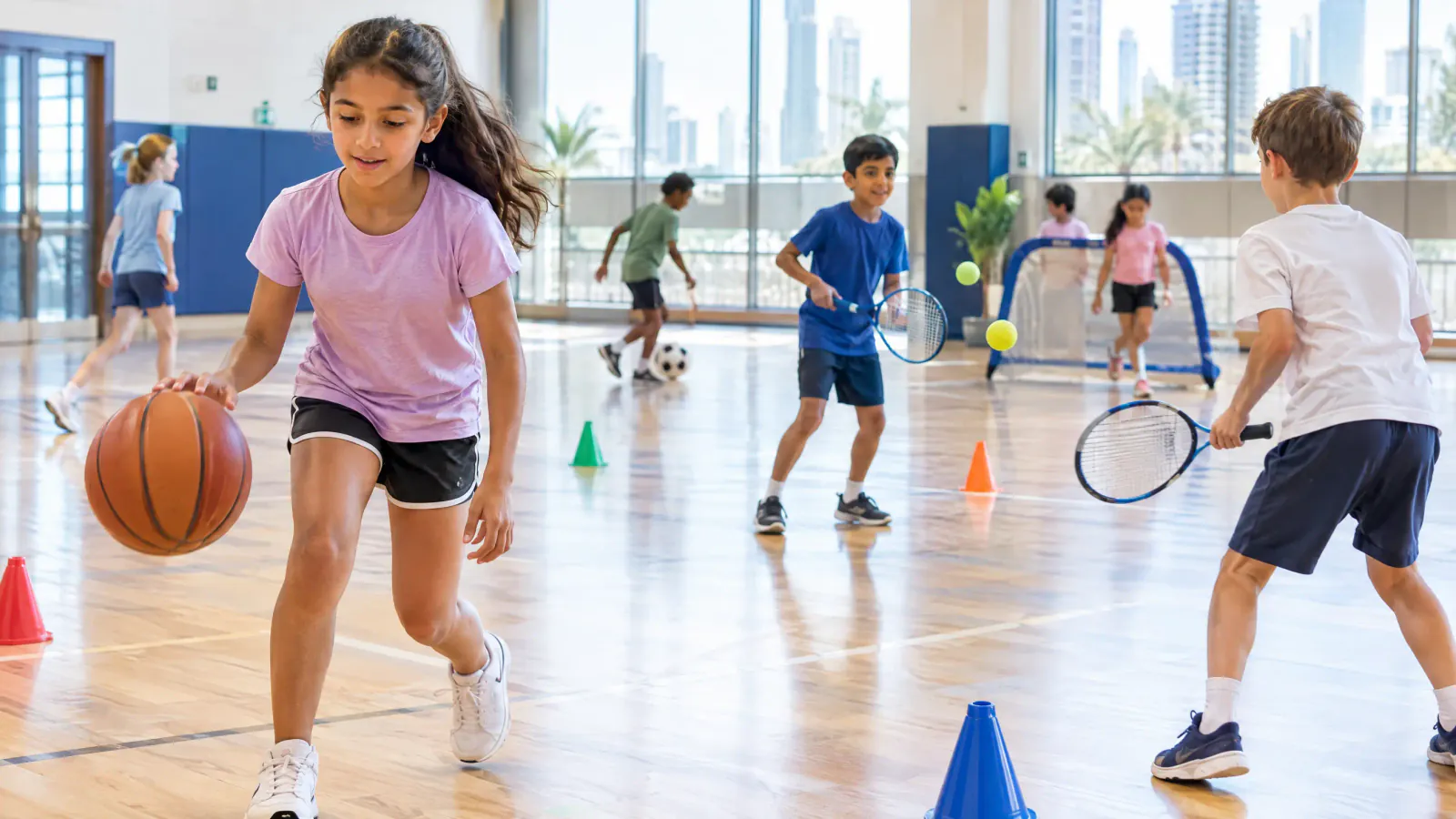
Five is a funny age for sport. Your child can run, jump and (mostly) listen, and classes for this age are everywhere: on Waha alone, dozens of swim schools, gymnastics clubs, dance studios, martial arts schools and football academies list classes that take 5-year-olds. But being allowed into a class isn't the same as being ready for every kind of sport.
The good news is that the research on this age is fairly clear, and it doesn't point to one "right" sport. It points to a mix. Here's what we found.
Is a 5-year-old ready for organised sport?
The American Academy of Pediatrics (AAP) looks at readiness in terms of motor skills, the ability to combine them, and attention span. Its 2019 report says children younger than 6 "may not possess sufficient skills and attention span, even for simple organized sports", and that age 6 "has been proposed as appropriate for most children to start organized sports". It gives a concrete example: "a 4-year-old child is not likely able to catch well and would not be ready for baseball" (Logan and Cuff, AAP, 2019).
The AAP's parenting site puts it practically. Before age 6, it says, "most children do not have the basic motor skills for organized sports", so it suggests activities "that focus on basic skills such as running, swimming, tumbling, throwing and catching", taught in short show-and-tell bursts with plenty of playtime. "Competition should be avoided," it adds (HealthyChildren.org).
So yes to classes at 5, but the right kind: skills and play rather than matches and league tables. That list of basic skills is also a neat summary of what a good mix looks like.
Movement skills come first
Researchers group the basic movement skills into three families: moving the body from place to place (running, hopping, jumping), controlling objects (throwing, catching, kicking) and balance (Lubans et al., 2010). Children don't simply grow into them. A meta-analysis of skill programmes found that children do not pick up these skills through growing alone: "These skills need to be learned, practised and reinforced." Programmes improved children's skills, while control groups who only had free play did not improve significantly (Logan et al., 2012).
For this exact age, a 2017 review of 30 trials with 6,126 children aged about 3 to 5 found that movement-skill programmes in nurseries and kindergartens improved skills overall. The authors rated their certainty in the size of the effect as "very low", and effects were larger when a movement-skills specialist ran the sessions (Wick et al., 2017).
Why bother? Children who are better at these skills tend to be more active and fitter. A review found "strong evidence for a positive association between FMS competency and physical activity" (FMS is short for fundamental movement skills), and an Australian study found that children who were good at throwing, catching and kicking at primary school age became teenagers with "a 10% to 20% higher chance of vigorous activity participation" (Barnett et al., 2009). These are associations: they don't prove that skill classes cause later activity, and researchers say the question of what drives what is still open (Robinson et al., 2015).
Why a mix works better than one sport
Guidelines ask for variety. The UK Chief Medical Officers advise that children "engage in a variety of types and intensities of physical activity across the week to develop movement skills, muscular fitness and bone strength", while noting that more high-quality evidence is needed (UK Chief Medical Officers, 2019). The World Health Organization (WHO) asks for activities "that are enjoyable, and that offer variety" (WHO 2020 guidelines, Bull et al.). Each kind of activity covers a different part of that list, which is why they complement each other.
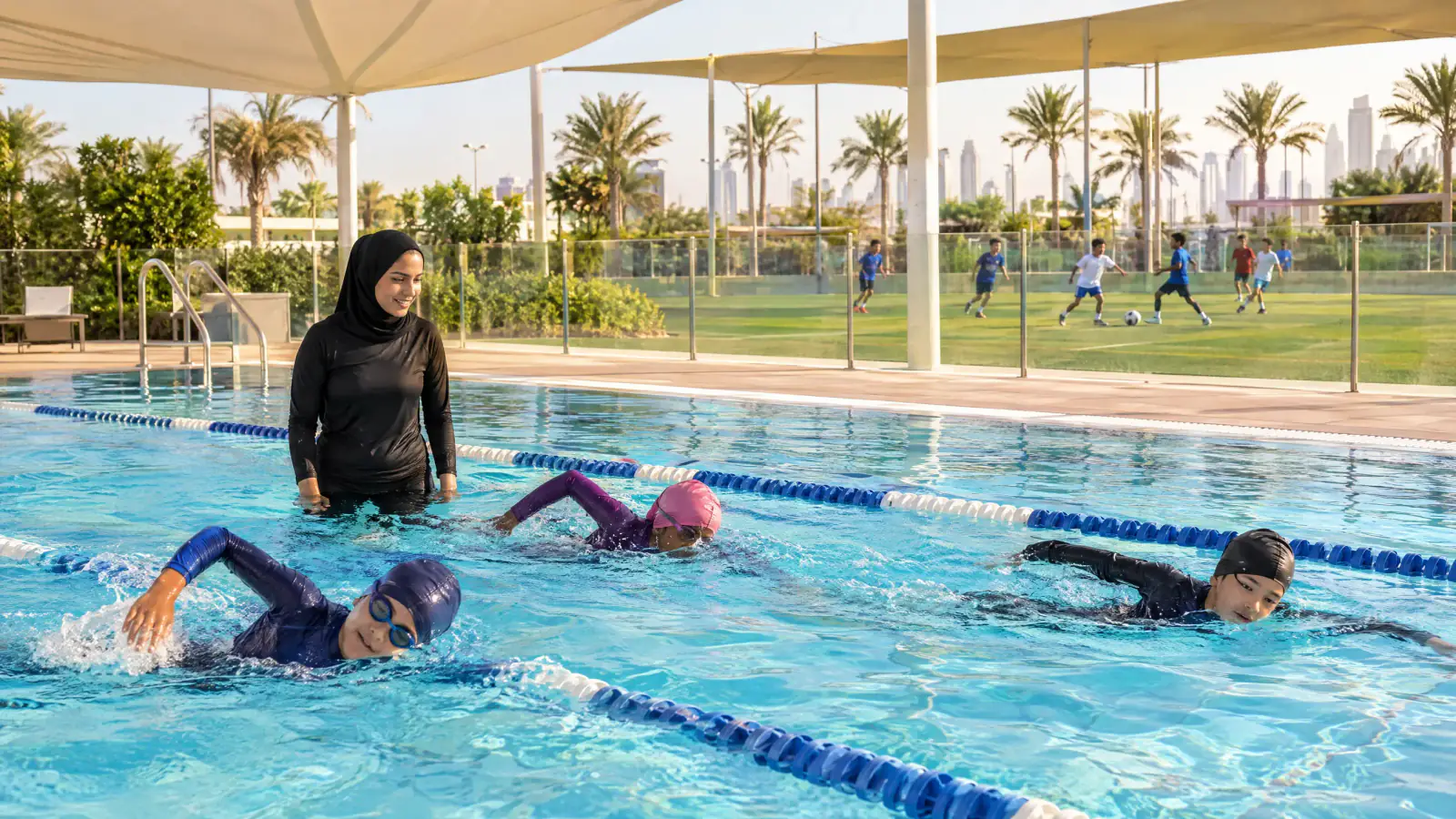
Swimming: safety first, fitness too. The AAP advises starting swimming classes after a child's first birthday (AAP, 2026), and its parenting site says: "By age 5 or age 6, most children in swim lessons can master the front crawl." Every child should learn to get back to the surface from underwater, swim about 25 yards (roughly 23 metres) and get out of the water. Lessons are "just one of several important layers of protection", so close supervision still matters (HealthyChildren.org). We found no good evidence that swimming speeds up movement skills on land, so treat it as a safety skill and good exercise rather than a shortcut to other sports.
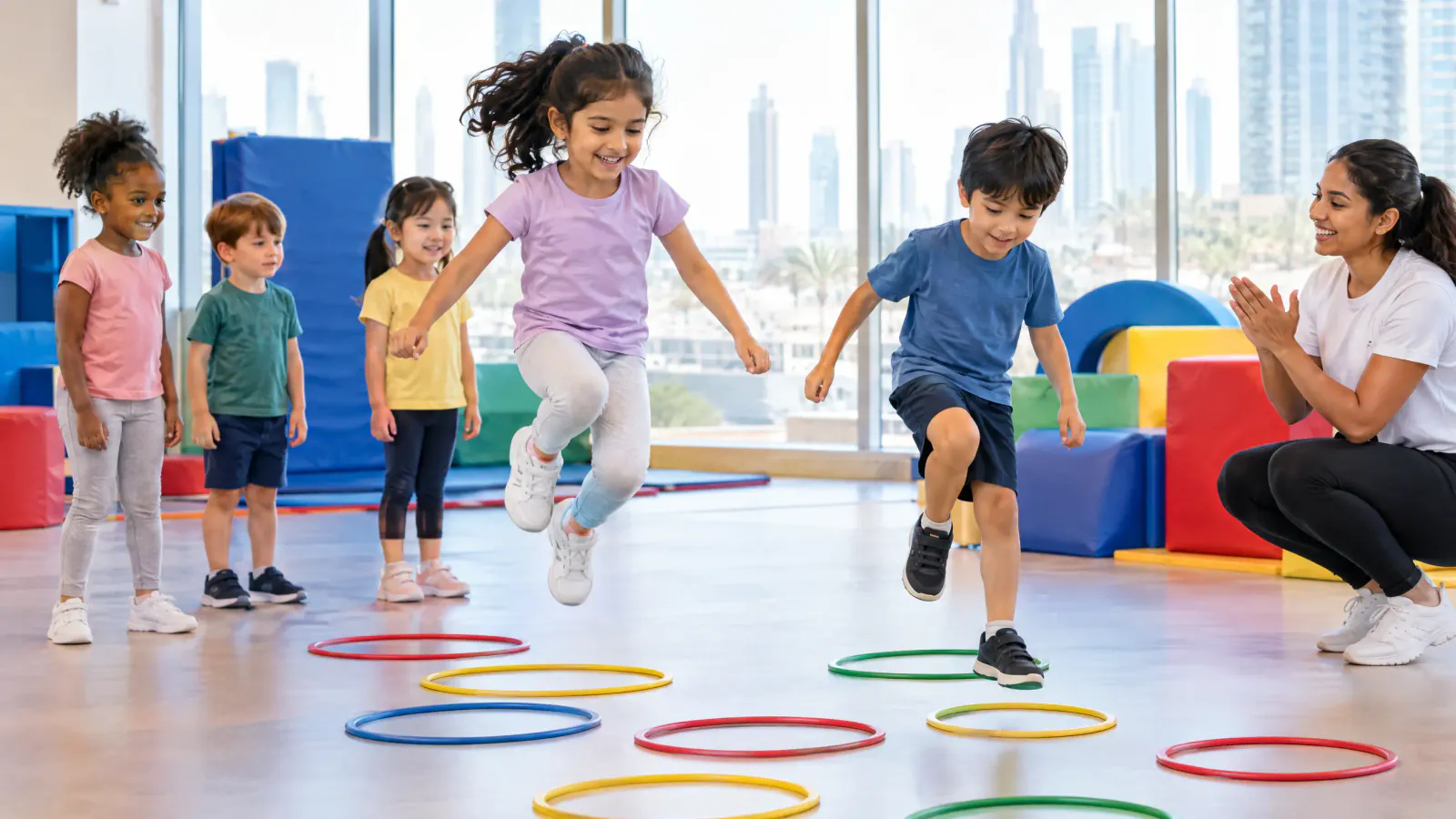
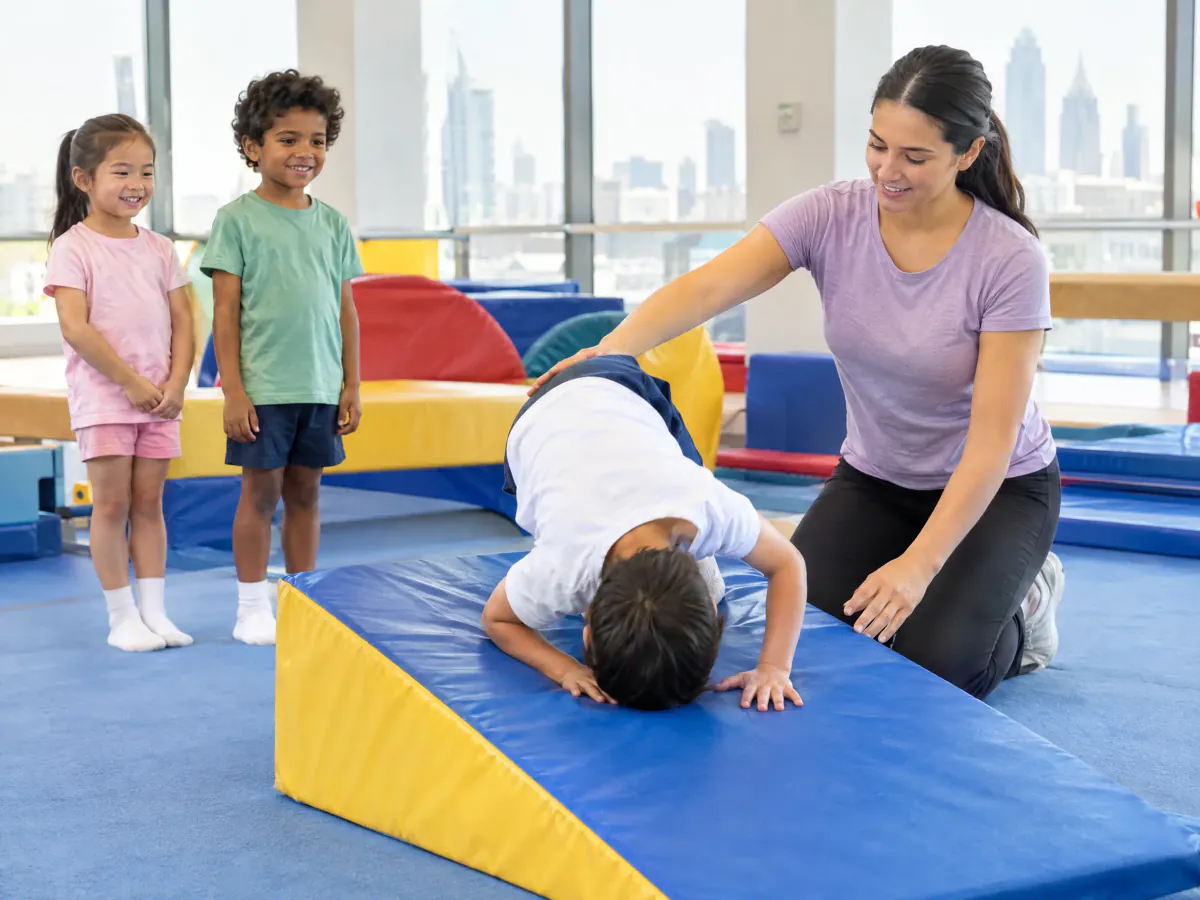
Gymnastics, tumbling and dance: body control. A 2025 trial randomly assigned 300 preschool children, 5 years old on average, to a twice-weekly developmental gymnastics programme or to their usual organised activities. The gymnastics group improved more on running, hopping and jumping skills, but ball skills improved about the same in both groups (Radanović et al., 2025). Dance studies point the same way, though a 2026 review rated the evidence on movement skills as low certainty (Luo et al., 2026).
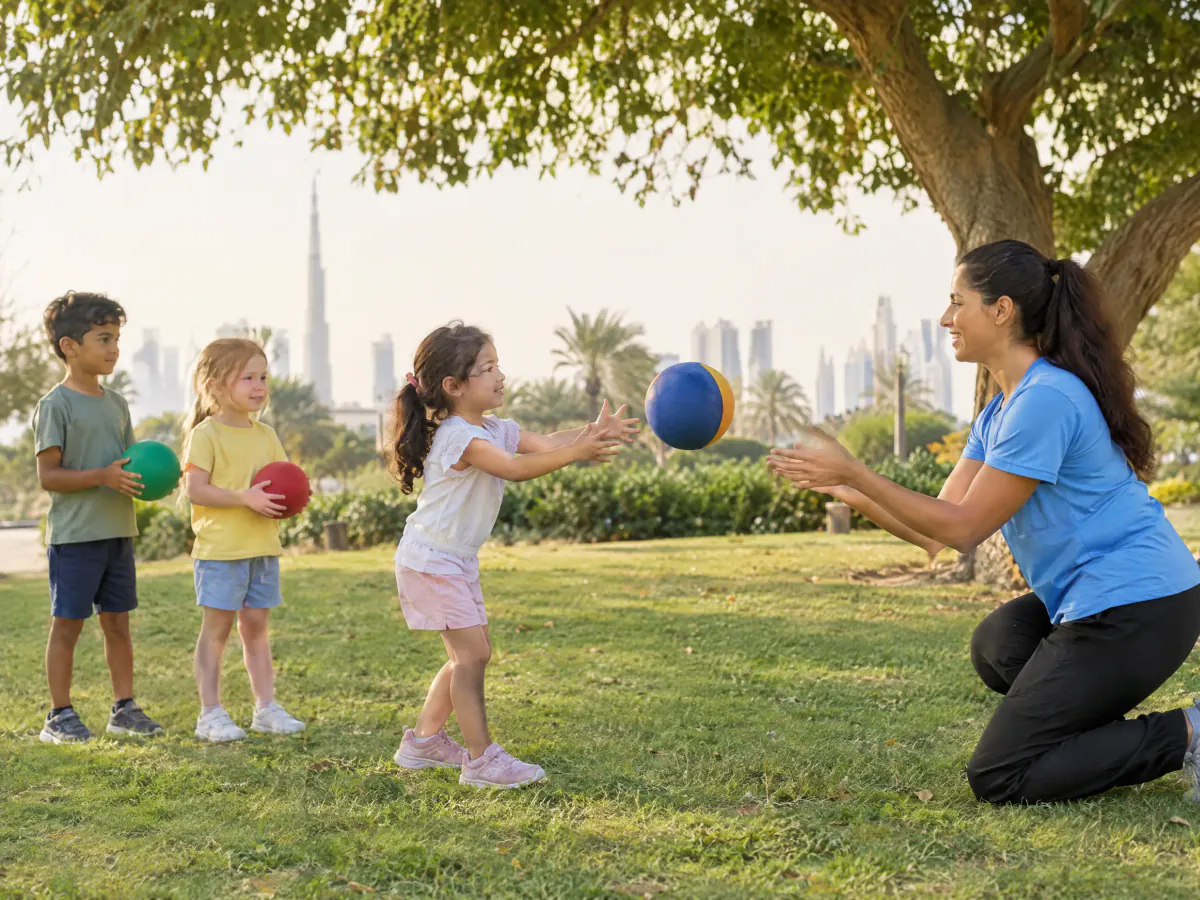
Ball games: throwing, catching and kicking. These are the skills the AAP's baseball example is about, and the ones linked with being active as a teenager. The AAP says children get there through free play combined with some purposeful practice: games in the park, a multi-sports class, or a football session for young children run as games rather than matches. Many Dubai academies take children this young: of the 71 football academies on Waha that publish class ages, 54 start at 4 or under (checked October 2026). If football is already the favourite, our guide to swimming and football shows how the two fit together.
What a week can look like
There's no evidence-based number of classes for a 5-year-old. What the guidance does say is this. The WHO asks children aged 5 to 17 for "at least an average of 60 min/day" of moderate-to-vigorous activity across the week, with activities that "strengthen muscle and bone" on at least 3 days. For comparison, its guidance for 3- and 4-year-olds is "at least 180 minutes in a variety of types of physical activities at any intensity" a day (WHO, 2019). And the AAP says children need "daily opportunity for free play", and that organised sport on its own "may not offer enough physical activity for optimal health".
Put together, a week that covers the main skills might include:
- one swimming lesson, for water safety and fitness;
- one class that trains body control, such as gymnastics, dance or martial arts;
- ball games on most days, in the park, the garden or a multi-sports or football session;
- plenty of unstructured play, every day.
That's a sketch, not a prescription. If your child is worn out, dreads a class or asks to stop, do less. Our guide to playing one sport or several covers rest and variety as children get older, and how many activities is too many goes through it by age.
Choosing classes for a 5-year-old
Look for classes where children spend most of the time moving and playing, with short demonstrations rather than long explanations, and no scores or rankings. For swimming, the AAP's checklist includes experienced, qualified instructors, being allowed to watch a class first, children swimming most of the lesson rather than waiting at the side, and lessons that run over several sessions.
Above all, look for fun. The AAP's 2019 report says children name fun as "the most rewarding part of organized sports participation", and it encourages parents to support "sport sampling" to build several skills, keep sport enjoyable and lower the risk of injury.
Making it work in Dubai
Indoor options for the hot months. Gymnastics, dance and martial arts happen indoors, so they carry on through the summer. Our guide to gymnastics and martial arts compares the two, and dance and sport looks at what dance trains. Several swim schools on Waha teach in indoor, shaded or temperature-controlled pools.
Start in term time. Many programmes follow the school terms, so September and January are natural starting points, and holiday camps are a gentle way to try something new in the breaks. Our UAE school holidays guide lists them for 2026-27.
Keep journeys short. Filter any of these pages by area and age to find classes near home or school. For younger brothers and sisters, the babies and toddlers page lists baby and toddler classes.