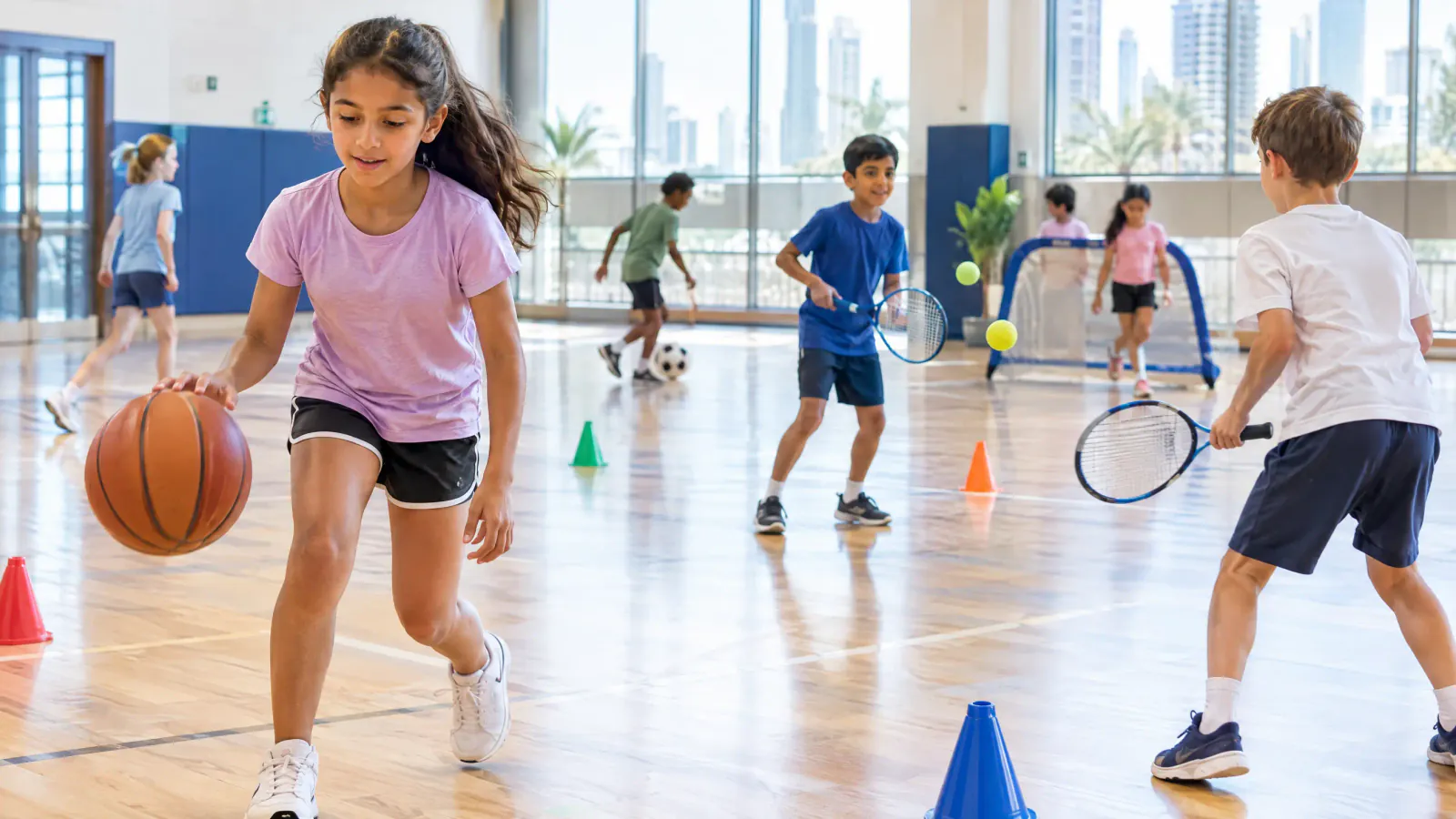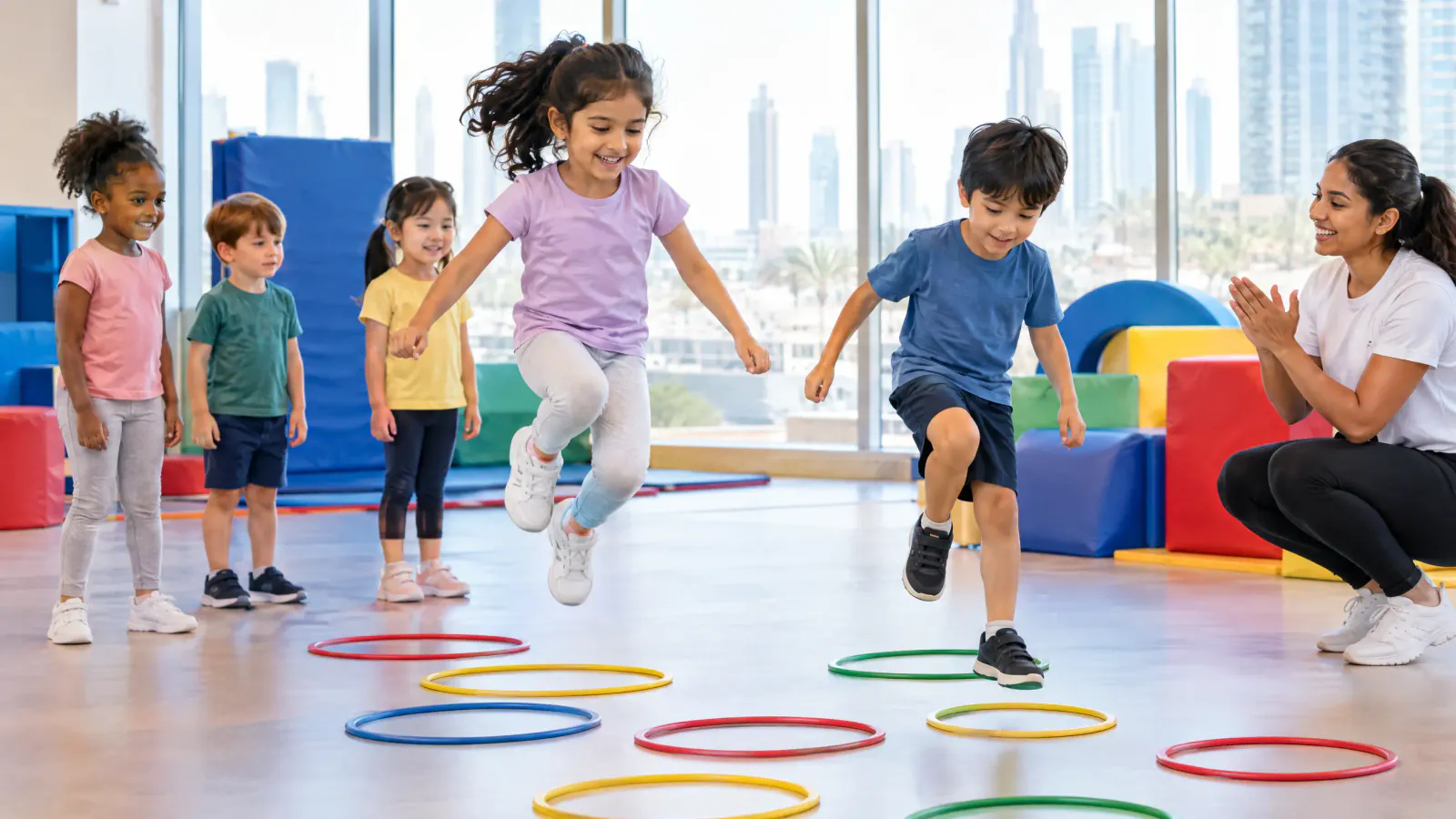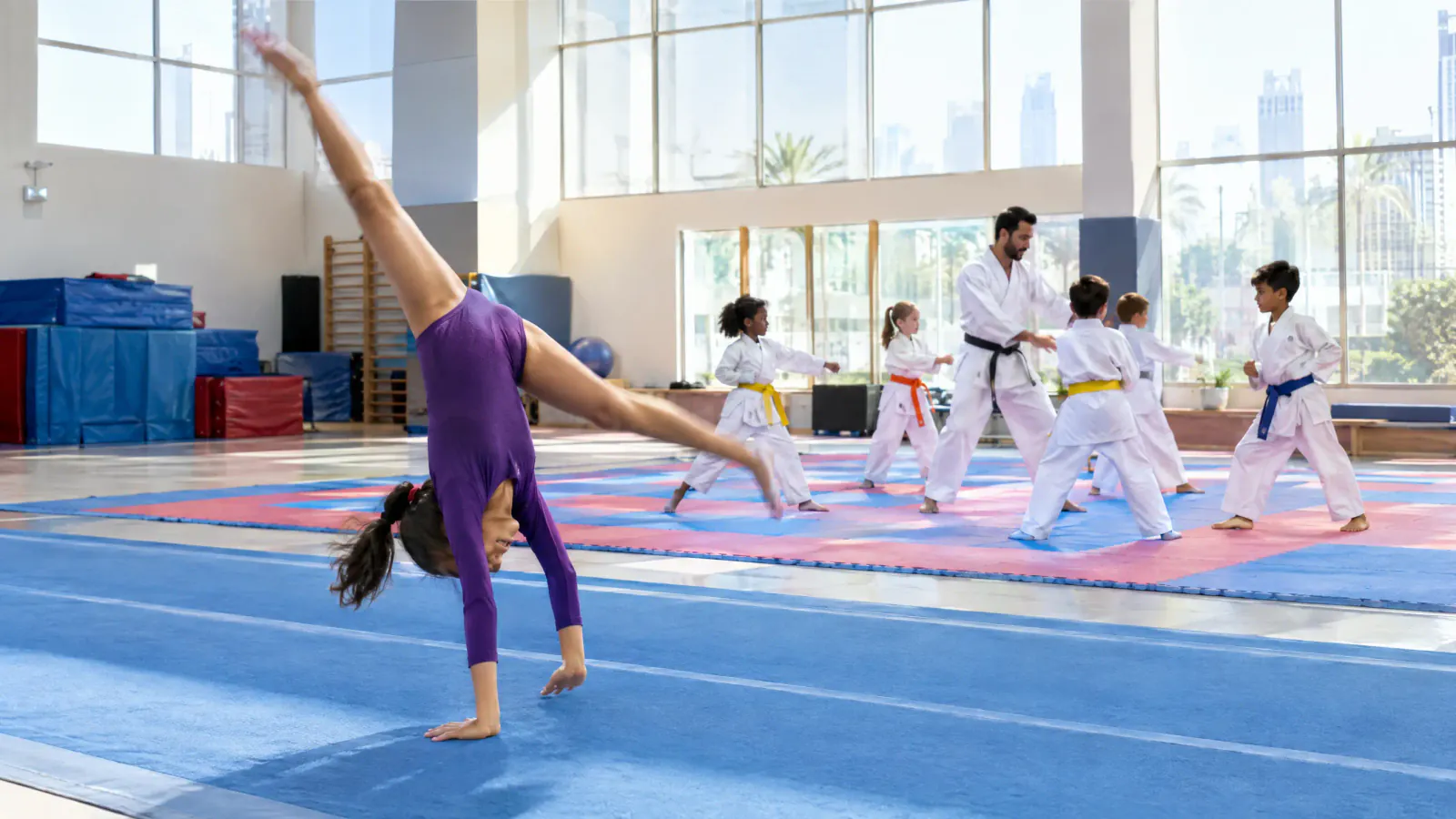
Gymnastics and martial arts look quite different from the side of the hall: cartwheels and beams on one side, white uniforms and coloured belts on the other. Underneath, they share a lot: balance, strength, control of the whole body, and learning how to land. Both are taught indoors, so in Dubai they carry on through the hottest months.
If you're choosing between gymnastics and karate, or between judo and karate, the research can help, though less than some class flyers suggest. Here's what it says, and where it runs out.
What each one trains
Gymnastics is about controlling the whole body: jumping, rolling, balancing and holding shapes. In a 2025 trial, 300 preschool children, 5 years old on average, were randomly assigned to a twice-weekly developmental gymnastics programme or to their usual organised activities for 36 weeks. The gymnastics group "showed greater improvement in all locomotor skills tests", the running, hopping and jumping kind, while ball skills improved about the same in both groups (Radanović et al., 2025).
Martial arts train balance and coordination too, along with strength and fitness. A 2022 review of 16 studies with 1,615 children, half of them on karate and the rest on judo, taekwondo and aikido, concluded that the programmes helped physical fitness, "especially for parameters such as cardiorespiratory fitness, speed, agility, strength, flexibility, coordination, and balance" (Stamenković et al., 2022). Four of those studies had no comparison group, and the authors warn about copying programmes with "relevant methodological limitations", so read it as encouraging rather than conclusive.
Keep that in proportion. A 2023 review of 16 studies of judo in children aged 7 to 15 found health benefits compared with children who only did school PE, but "there were no differences between judo and other sports groups" (Kowalczyk et al., 2023). The benefit seems to come largely from regular, organised activity, which other sports offer too.
Learning to fall: what's known
Falling well is a skill, and it's one of the first things judo teaches. The International Judo Federation's history of the sport says its founder, Jigoro Kano, "removed the dangerous Jujutsu techniques, by improving the art of falling" (International Judo Federation), and the 2023 judo review notes that training for beginners "mainly includes the development of general physical fitness and learning falling techniques". Gymnastics and trampolining classes teach landing too.
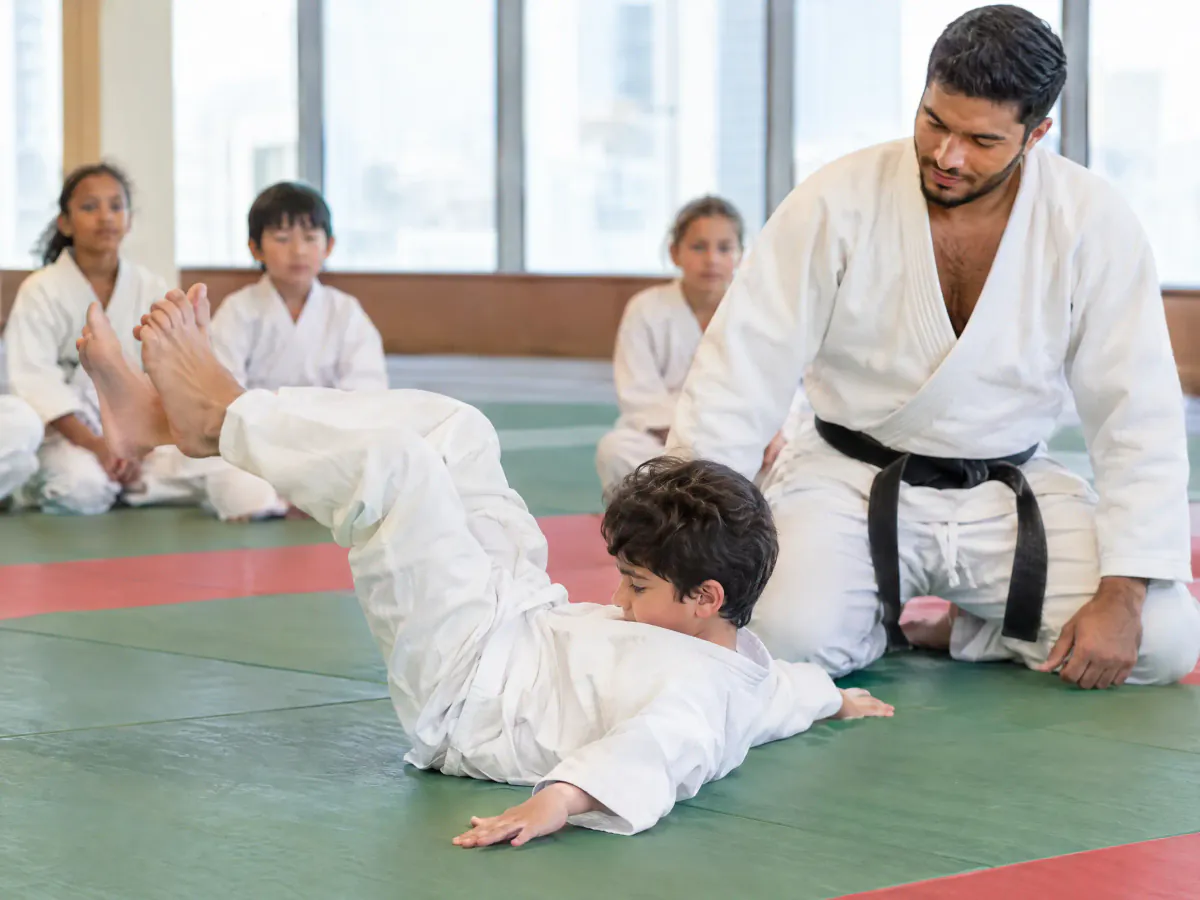
Does it work? A 2017 meta-analysis pooled 13 studies of seven ways of landing, including squatting, rolling and the martial-arts slap on the mat. "In general, all strategies, except for the martial arts slapping technique, significantly reduced impact load", and rolling worked well for sideways falls (Moon and Sosnoff, 2017). But the studies measured impact forces rather than injuries, and the authors note they focused on young people falling on purpose; real, unexpected falls still need testing.
The nearest thing to a children's trial comes from football. FIFA's 11+ Kids warm-up has seven exercises: three on hopping, jumping and landing, three on strength and stability, "and one exercise on falling technique". In a trial of 3,895 young players it cut injuries by 48% (Rössler et al., 2018). Because falling was one exercise of seven, the trial can't say what falling practice does on its own.
So learning to fall is a sensible skill to practise on a padded mat with a coach. No study has shown that breakfall training prevents injuries in children, so think of it as a useful habit rather than protection.
Focus and behaviour: one good trial, mixed reviews
Many parents hope a martial art will help with focus and self-control. The strongest single study is a randomised trial in a UK primary school, with 240 children aged 7 to 11 and a standard 11-week beginners' taekwondo course. Afterwards, teachers rated the taekwondo children as having "fewer symptoms of conduct problems and better effortful control (specifically attentional control)", and the children rated the classes very positively. It made no difference to impulsivity, helpful behaviour or working memory (Ng-Knight et al., 2022).
Reviews of aggression disagree. A 2017 meta-analysis of 12 studies with 507 young people aged 6 to 18 found a medium effect in the nine studies that followed children over time, and concluded that martial arts "has a potential to reduce externalizing behaviors in youth", while calling for more research (Harwood et al., 2017). A 2026 review of 11 studies, two of them randomised trials, found that "the evidence does not indicate a consistent directional effect of martial arts interventions on aggressive behavior", with results varying by style, teaching and setting (Deng et al., 2026).
So a good class may help some children with attention, but it isn't a reliable fix for behaviour. The 2026 review's own conclusion is that martial arts training "should not be interpreted as having a uniform aggression-reducing effect". If you're worried about your child's behaviour or attention, talk to their school or your GP too.
Judo or karate? How the two differ
This is the question most parents arrive with. Karate is easy to find here: when we checked in October 2026, Waha's karate page listed 37 dojos and clubs. In class, the two feel quite different:
- Judo is grappling: gripping the jacket, throwing, and holding a partner down on the mat. The IJF's history describes its techniques as "throws or nage waza, controls or katame waza", plus a third group that isn't allowed in competition. Because children are thrown, falling practice comes first. It may suit a child who loves rough-and-tumble play.
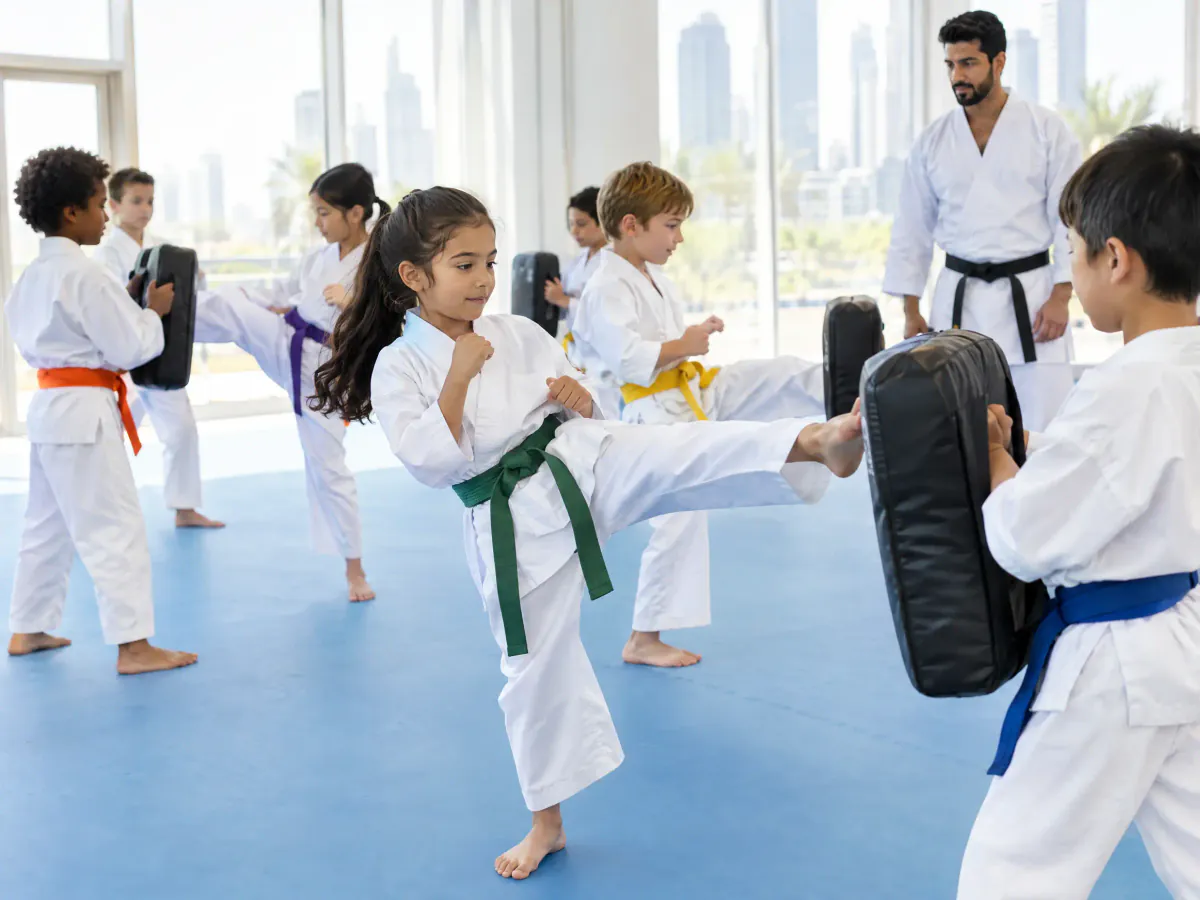
- Karate is mostly striking: punches, kicks and blocks, done with control. Competition has two disciplines, "sparring (kumite) and forms (kata)" (World Karate Federation rules, as summarised by the Western Australian government), and belt gradings include kata, the set sequences of moves. It may suit a child who likes routines and working towards the next belt. Ask the dojo when sparring starts and how much contact beginners do.
- Taekwondo, the Korean art in the trial above, is another striking style, known for its kicks. Taekwondo classes are on the martial arts page.
- Jiu-jitsu is grappling on the ground, using leverage to control a partner. Browse jiu-jitsu academies if your child prefers wrestling to kicking.
No research shows that one martial art is better for children than another: the 2022 review found fitness gains across all four it covered. So choose by what your child enjoys and by the class itself. Book a trial, watch how the coach handles beginners, and ask how classes are split by age and belt, and how often gradings happen.
Gymnastics and starting young
Gymnastics is one of the few sports where experts say serious training may need to start early. A position statement from the American Medical Society for Sports Medicine (AMSSM) lists gymnastics and martial arts among suitable activities for children aged 6 to 9, and says early specialised training "may be necessary in those technical sports that require elite-level competition prior to full maturation such as gymnastics" (DiFiori et al., AMSSM, 2014). Its recommendation reads: "With the possible exception of early entry sports such as gymnastics, figure skating, and swimming/diving, sport diversification should be encouraged at younger ages." It grades that recommendation C, meaning it rests on consensus and expert opinion rather than trials.
That matters only if your child is heading for competitive gymnastics, not for a weekly class. If your child is invited into a squad, ask about hours and rest days. The same statement notes: "Among young gymnasts, wrist pain was significantly related to training intensity, as measured by skill level and number of hours training per week." Wrist or back pain that keeps coming back is a reason to see your GP or a physio, not to train through it. Our guide to playing one sport or several covers specialising in more detail.
Fitting both into a week
On paper the two complement each other: gymnastics trains landing and whole-body control, and a martial art adds partner work, rules and, in judo, a lot of falling. Neither involves catching or kicking a ball, so a ball game or a swim covers what's missing. That's our reasoning from the evidence above, not a tested combination.
For a 6- to 9-year-old, a week might hold one gymnastics class, one martial arts class, ball games or swimming on other days, and plenty of free play. For younger children, see which sports suit a 5-year-old. If the week already feels full, our guide to how many activities is too many looks at it by age.
Browse gymnastics clubs or martial arts classes by area and age, and book a trial before you buy a uniform.