At some point, many parents hear it: if your child is serious about football, or swimming, or tennis, they should drop the other things and focus. It sounds like common sense. More practice in one sport should mean getting better at it faster.
For most sports and most children, the evidence points the other way. Children's sports-medicine groups in the US and the International Olympic Committee have all looked at this question, and they agree on more than you might expect. They also say plainly where the research is thin. Here's what they found.
It matters here because one sport can quietly fill the year. Many Dubai academies run three school terms of weekly training and then holiday camps in the breaks, so a child can play the same sport for most of the year without anyone deciding they should.
What 'specialising' actually means
Having a favourite sport isn't the same as specialising. In a 2016 consensus statement, the American Orthopaedic Society for Sports Medicine (AOSSM) defined early specialisation by three things together: intensive training or competition in one organised sport for "greater than 8 months per year (essentially year round)", playing it "to the exclusion of participation in other sports (limited free play overall)", and doing this as a child before puberty, around age 12 (LaPrade et al., AOSSM, 2016).
So a child who loves football, plays it twice a week and swims or rides a bike the rest of the time isn't specialising. A 9-year-old in year-round training for one sport, with little time for anything else, is.
What the research shows about injuries
The clearest finding is about overuse injuries, the kind that build up from repeating the same movements, rather than a single fall or tackle. A 2018 meta-analysis pooled the studies that compared children by how specialised they were. Highly specialised young athletes had about 1.8 times the risk of an overuse injury of those with low specialisation (Bell et al., 2018).
That sounds decisive, but look at what's behind it: only 5 studies met the authors' criteria, 4 of them looked back in time rather than following children forward, and the authors call for more prospective research. It is an association, not proof that specialising causes injuries.
The study most often quoted on this compared 1,190 athletes aged 7 to 18 seen at two US hospital sports clinics (Jayanthi et al., 2015). Children who played more hours of sport a week than their age in years had roughly double the odds of a serious overuse injury. Children whose organised sport outweighed their free play by more than 2 to 1 had higher odds too.
Those two numbers have turned into popular rules of thumb, but they aren't proven rules. They come from one study, they are associations, and the American Academy of Pediatrics (AAP) says the hours idea "needs to be validated by other long-term studies" (Brenner, AAP, 2016). They're still a useful prompt to look at your child's week.
And burnout?
Burnout is harder to pin down. The AAP describes it as physical or mental exhaustion and a reduced sense of accomplishment, and calls it "one of the primary reasons for attrition in youth sports", meaning children giving up (Brenner and Watson, AAP, 2024).
Whether specialising causes it is where the experts differ. The AAP's 2016 report states: "Burnout, anxiety, depression, and attrition are increased in early specializers." The American Medical Society for Sports Medicine (AMSSM) wrote in 2014 that a link between early specialisation and both overuse injury and burnout "has yet to be demonstrated" (DiFiori et al., AMSSM, 2014), and the AOSSM found that studies directly linking specialisation to psychological outcomes "are lacking".
So the research is mixed. The injury link has more behind it, including the meta-analysis that came after the AMSSM statement; the burnout link is plausible but less well established.
Do elite athletes specialise early?
Mostly, no. A 2020 systematic review of 22 studies put it this way: "Elite athletes often specialised between the ages of 14 and 15 compared with their non-elite or semi-elite peers who typically specialised prior to 13 years." All the studies looked backwards and the authors say the research is limited, but they conclude that early specialisation "is not required to achieve success at elite levels" (Kliethermes et al., 2020).
The International Olympic Committee's consensus statement on youth athletic development agrees: "Numerous successful elite athletes participated in several sports before specialising." It also says that "diverse athletic exposure and sport sampling enhance motor development and athletic capacity, reduce injury risk and increase the opportunity for a child to discover the sport(s) that he/she will enjoy and possibly excel at" (Bergeron et al., IOC, 2015).
The exceptions
A few sports are different because their athletes peak young. The AAP's report says: "Figure skating, gymnastics, rhythmic gymnastics, and diving may require early specialization, because peak performance occurs before full physical maturation." The AMSSM and the IOC also mention swimming. Even so, the AOSSM concluded that the overall evidence supporting early specialisation "is not convincing".
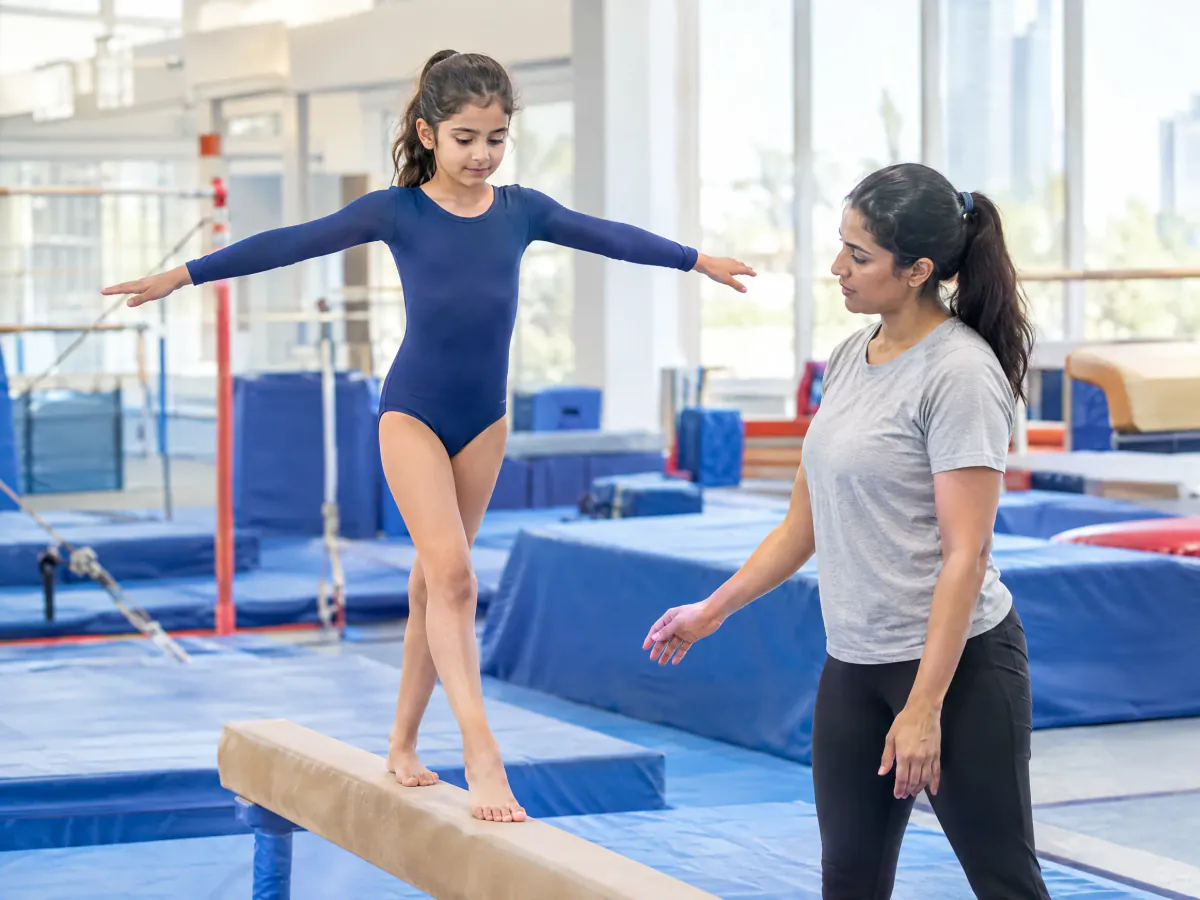
If your child is in one of these sports, it's worth asking the club how they balance training with rest as your child moves up the levels.
Why different sports complement each other
This is the part that matters most for planning. The IOC recommends encouraging children to take part in "a variety of different unstructured (ie, deliberate play) and structured age-appropriate sport-related activities", and adds: "Diversification and variability of athletic exposure between and within sports should be encouraged and promoted."
Researchers who study how children develop in sport call the years from about 6 to 12 the "sampling years", and argue that plenty of playful, unstructured sport in that period "builds a solid foundation of intrinsic motivation": the kind of wanting to play that keeps children in sport (Côté and Hancock, 2016).
No study has tested particular pairings in children, so what follows is our reasoning from that evidence rather than a research finding. Sports load the body differently and train different skills, which is why some combinations fit well:
- A weight-supported sport and an impact sport. Swimming builds fitness but not bone; running and jumping sports fill that gap. Our guide to swimming and football goes through it.
- A body-control activity and a ball sport. Gymnastics and dance train balance, landing and moving the whole body; ball games train throwing, catching, kicking and reading play. See which sports suit a 5-year-old, gymnastics and martial arts and dance and sport.
- An outdoor sport and an indoor one. In Dubai, that way one of them can carry on through the hottest months.
Rules of thumb, and how solid they are
Here's the advice in one place. Most of it is expert guidance built on observational studies, not trials, so treat it as sensible defaults rather than hard limits.
- Play more than one sport, at least until puberty. The AAP says this "decreases the chances of injuries, stress, and burnout in young athletes".
- For most sports, wait until around 15 or 16 to specialise. The AAP says current evidence suggests this keeps the risks down. Gymnastics, figure skating and diving are the possible exceptions.
- Take breaks from the main sport. The AAP advises at least 1 to 2 days a week off a child's main sport, and at least 3 months a year off it in total, in blocks of a month. Children can stay active in other things during those breaks.
- Watch hours and free play. More weekly hours than a child's age, or organised sport outweighing free play by more than 2 to 1, were linked with injury in one study. They are a prompt to check, not a proven limit. Our guide to how many activities is too many looks at the whole week.
- Keep it fun. Children name fun as the most rewarding part of organised sport, according to the AAP's 2019 report (Logan and Cuff, AAP, 2019).
Building a multi-sport year in Dubai
Use the summer. Many academies run weekly training in school terms and switch to camps in the long summer break, and outdoor sport is hard work in the heat. That makes July and August a natural month or two off the main sport: an indoor activity, a swim course or a holiday camp in something new keeps your child active.
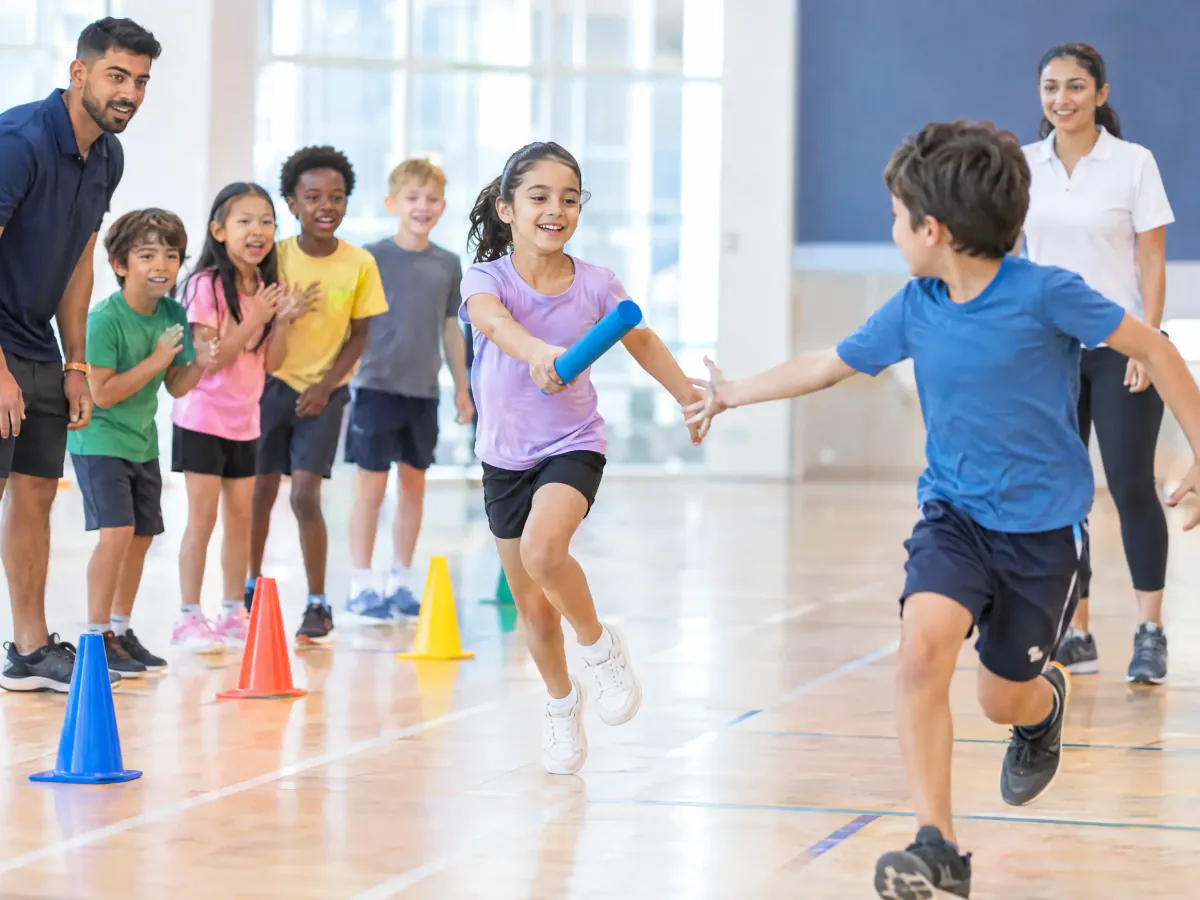
Sample before you commit. Multi-sports classes mix several sports in one session, and a week of camp is a short, easy way to try something new. The UAE school holidays guide has the dates of every break this school year.
Mix the types. Pair a ball sport with something from water sports or racket sports, or browse every kids' sports class in Dubai by area and age. Choosing classes near school or home keeps the week manageable.