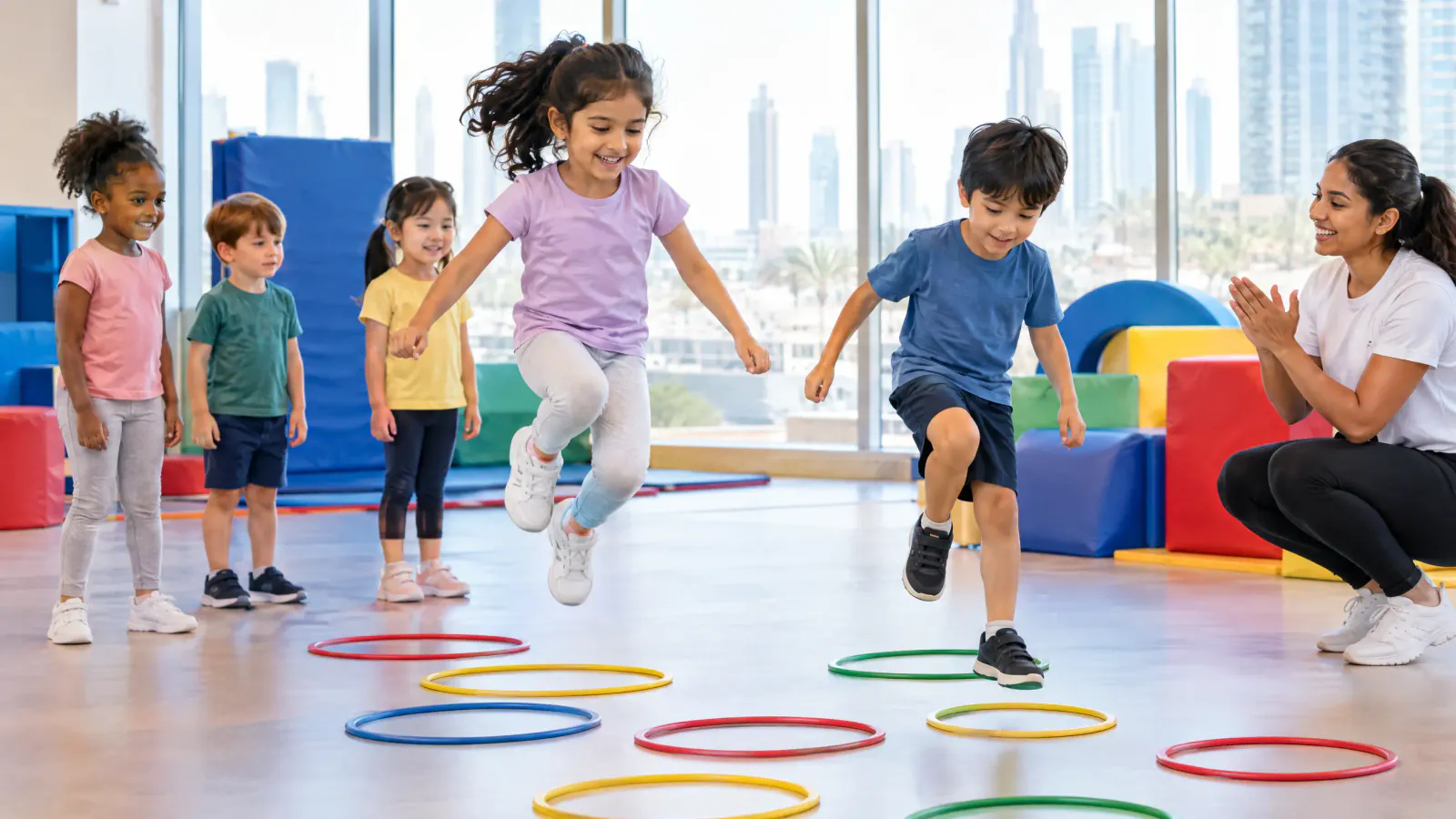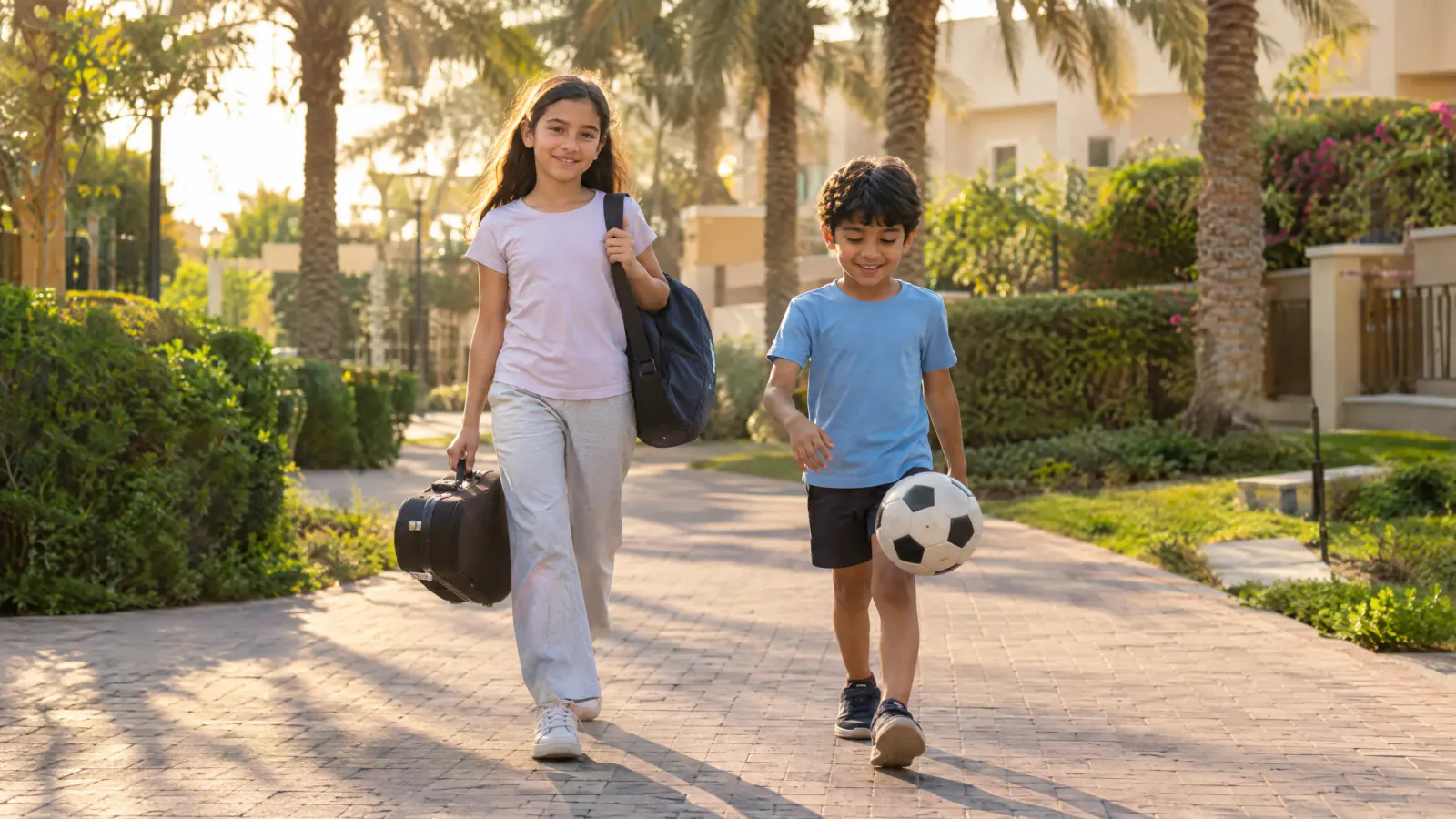
It usually creeps up. A swimming lesson, a football session, then tutoring, a language class and music, and suddenly every afternoon has somewhere to be. Then another parent mentions that their child does six things a week, and you wonder whether yours is doing too much, or too little.
There is no research-backed number of activities for any age. What the research and children's doctors do offer is a set of things worth checking: hours of sport, rest, time to play, sleep, and whether your child still enjoys it. Here's what we found.
There's no magic number
The worry has a name in research: the over-scheduling hypothesis, the idea that too many organised activities leave children stressed and worse off. It has mostly been tested in American teenagers, and it mostly hasn't held up. A study that followed 1,115 young people aged 12 to 18 into their early twenties found that more hours in organised activities went with better outcomes as young adults, such as wellbeing and further education, and had no link with distress or substance use. The authors concluded that the study "provides no support for the over-scheduling hypothesis" (Mahoney and Vest, 2012).
There is a limit, though. In a study of more than 13,000 American high school students, more activities and more hours went with better grades, but only up to a point: "At higher breadth and intensity, the academic adjustment of youth declined" (Fredricks, 2012).
What seems to matter more is the pressure around the activities. A study of 314 children nearing 14 in one wealthy US town found "negligible evidence for deleterious effects of high extracurricular involvement per se". How critical children felt their parents were mattered far more (Luthar et al., 2006). These are observational studies of teenagers, so they can't settle the question for a 6-year-old in Dubai, but they point the same way: the number matters less than how your child feels about it.
Sport: hours and rest
For sport there is more specific guidance, because overuse injuries (the kind that build up from repeating the same movements) are well studied. A study of 1,190 young athletes aged 7 to 18 at two US hospital sports clinics found that children who played more hours of organised sport a week than their age in years had about twice the odds of a serious overuse injury (Jayanthi et al., 2015). Children whose organised sport outweighed their free play by more than 2 to 1 had higher odds too.
The American Academy of Pediatrics (AAP) parenting site turns the first finding into a rule of thumb: "A good general rule is that kids should not train more hours each week than their age." It comes from one study that found an association, so treat it as a check rather than a limit. The same AAP doctors advise "1 to 2 days of rest every week with at least 2-3 months off during the year", which can be split into one-month breaks (HealthyChildren.org, burnout), and one team at a time in a season (HealthyChildren.org, overuse injuries). Our guide to playing one sport or several explains why variety helps too.
Free play counts
Free play is the time children spend doing whatever they like: climbing, chasing, building, making up games. It's easy to squeeze out because it never appears on a timetable. The AAP's report on play says it "is not frivolous: it enhances brain structure and function and promotes executive function", the mental skills that help children pursue goals and ignore distractions (Yogman et al., AAP, 2018). An earlier AAP report warned that "time for free play has been markedly reduced for some children" (Ginsburg, AAP, 2007).
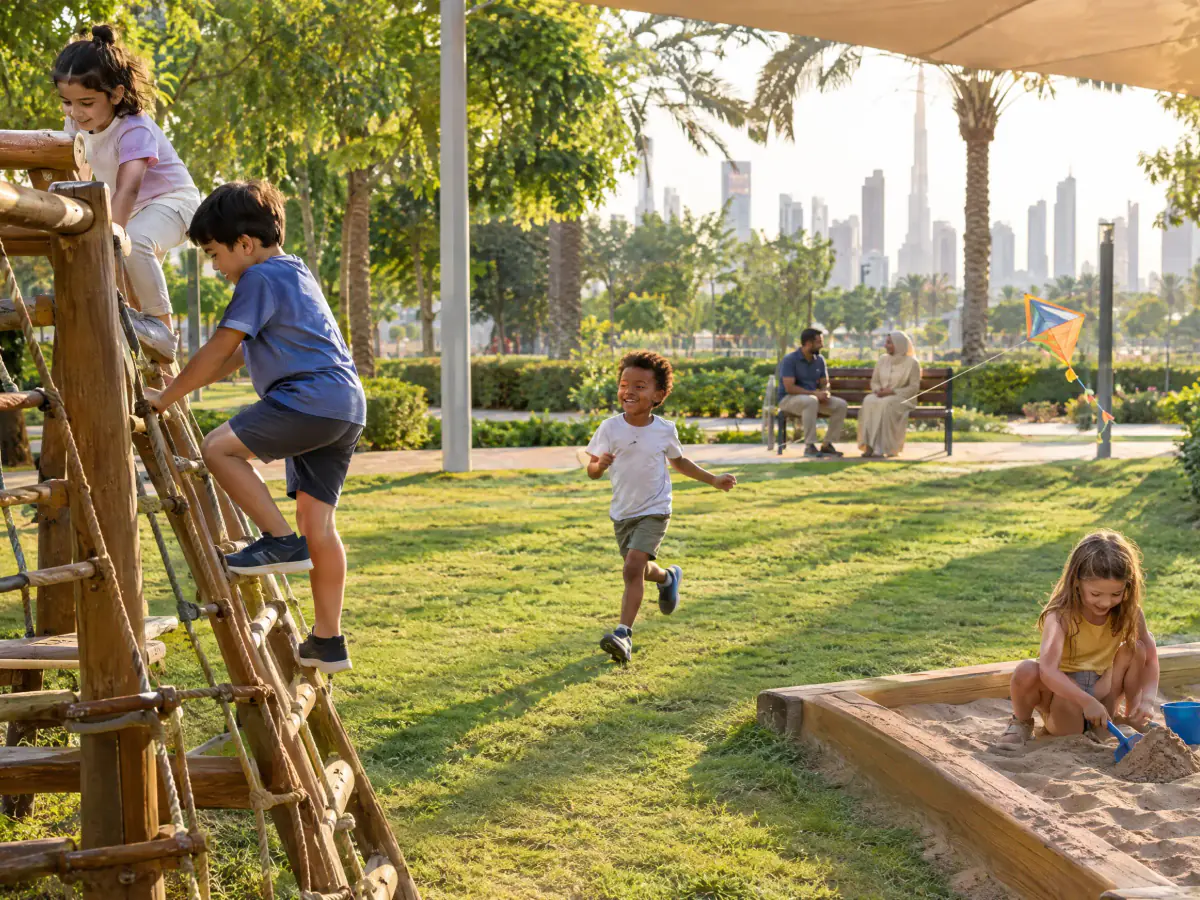
Active play counts as exercise, too. The World Health Organization (WHO) asks children aged 5 to 17 for "at least an average of 60 min/day" of moderate-to-vigorous activity across the week, and defines physical activity as "Any bodily movement produced by skeletal muscles that requires energy expenditure" (WHO 2020 guidelines, Bull et al.). A game of tag that leaves them out of breath does the job as well as a class.
Sleep and downtime
Sleep is often where a busy week shows first. The American Academy of Sleep Medicine's consensus, endorsed by the AAP, is 10 to 13 hours in 24 (naps included) at ages 3 to 5, 9 to 12 hours at 6 to 12, and 8 to 10 hours for teenagers (Paruthi et al., 2016). So work backwards from bedtime: a class that finishes at 7.30pm, the drive home, dinner and homework can push sleep later than you'd expect.
Downtime matters too, but it doesn't have to mean a screen. WHO advises children to limit time spent sitting, "particularly the amount of recreational screen time", while saying the evidence was too thin to set a precise limit.
Signs it's too much
Children rarely say they're doing too much. These signs come from the AAP's guidance on overtraining and burnout, which is about sport but works for any busy week:
- It stops being fun. The AAP describes burnout as "when kids no longer feel a sense of fun and accomplishment when playing or practicing".
- Tired, sleeping badly or out of sorts. The AAP links overtraining with "persistent fatigue, impaired sleep and alterations in mood" (AAP news, 2024).
- Pain that keeps coming back. The first stage of an overuse injury is pain in one part of the body after games or training. Pain that lasts is a reason to see your GP or a physiotherapist, not to push through.
- No time left over. Some children, the AAP's parenting site notes, are "so overscheduled with homework, music lessons, and other planned activities that they do not have time for exercise" (HealthyChildren.org, physical activity).
- They go because you want them to. "The interest should start with the child, not the parent," says Dr Kelsey Logan, an author of the AAP's 2019 report on organised sport (HealthyChildren.org, 2019).
If you're worried about your child's energy, mood or sleep, talk to your GP. Often the fix is simple: drop one thing, or swap a class for a free afternoon, and see how the next few weeks go.
What a week can look like at 5, 8 and 12
These are sketches built from the guidance above, not prescriptions. A week that suits one of your children can wear out the other.
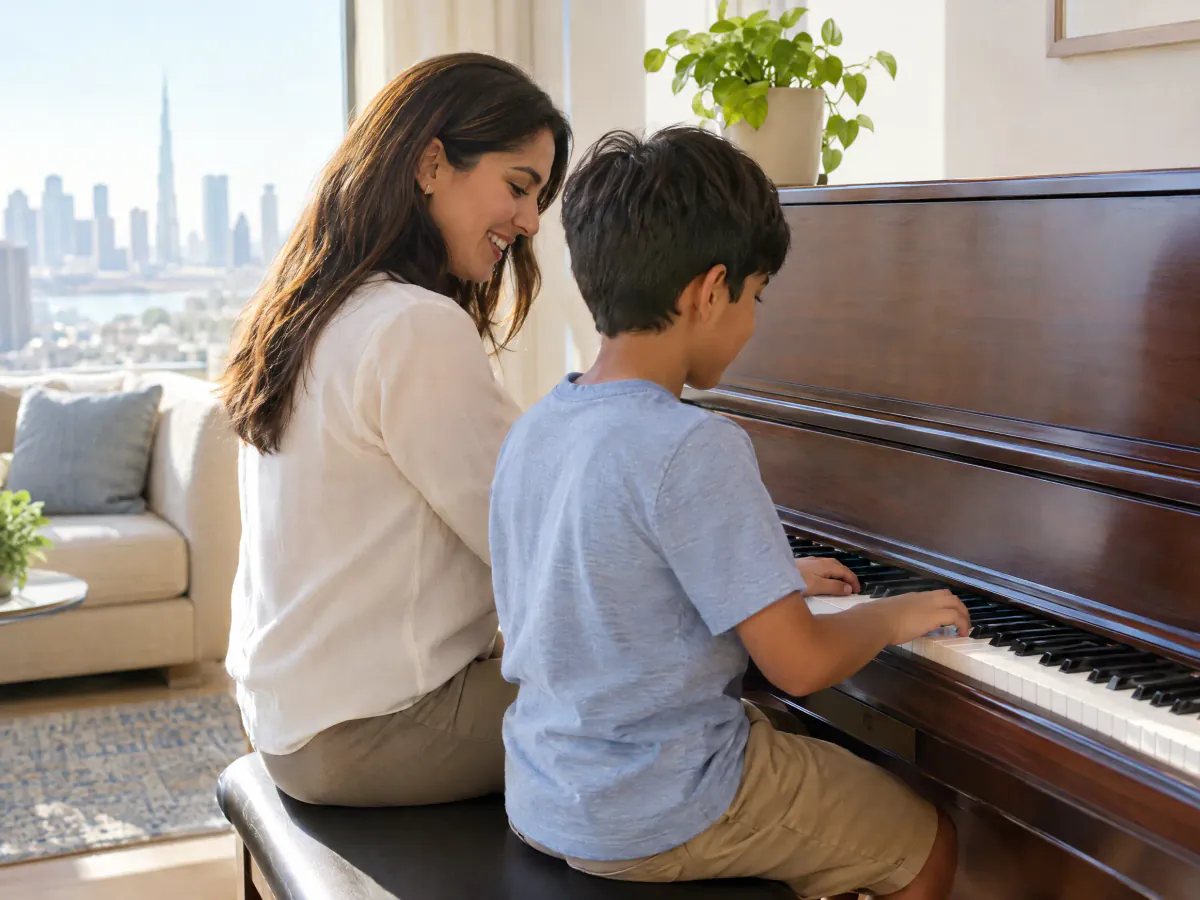
- Around 5: one or two short classes, such as swimming and a gymnastics, dance or music class, and free play every day. The AAP says most children are ready for organised sport "at about age 6", and that before then "young children should spend an ample amount of time daily in free play". Sleep: 10 to 13 hours. See which sports suit a 5-year-old.
- Around 8: two or three regular activities, perhaps a sport, swimming and one that isn't sport, such as music or a language, with a couple of afternoons a week with nothing booked. Sleep: 9 to 12 hours.
- Around 12: more choice, with more of it coming from your child. If one sport becomes the main one, the rest advice matters most: a day or two off it each week and a month off it a few times a year. Leave room for homework. Sleep: 9 to 12 hours, then 8 to 10 from 13.
Classes that aren't sport count as well. Music lessons, tutoring, a language or Quran classes don't add to the risk of sports injuries, but they take time and energy from the same week.
Fitting it around school days and the drive
Count the journey. A 45-minute class with 30 minutes' drive each way takes nearly two hours out of an afternoon. Filtering sports classes and other activities by area, so they're close to school or home, can free up as much time as dropping a class.
Use the school terms. Many programmes follow the school terms, so the start of each term is a natural point to review: keep what your child loves, drop what they don't, and add one new thing at most. School holidays can be the month off from a main sport. If cost is part of the decision, see what kids' activities cost in Dubai.