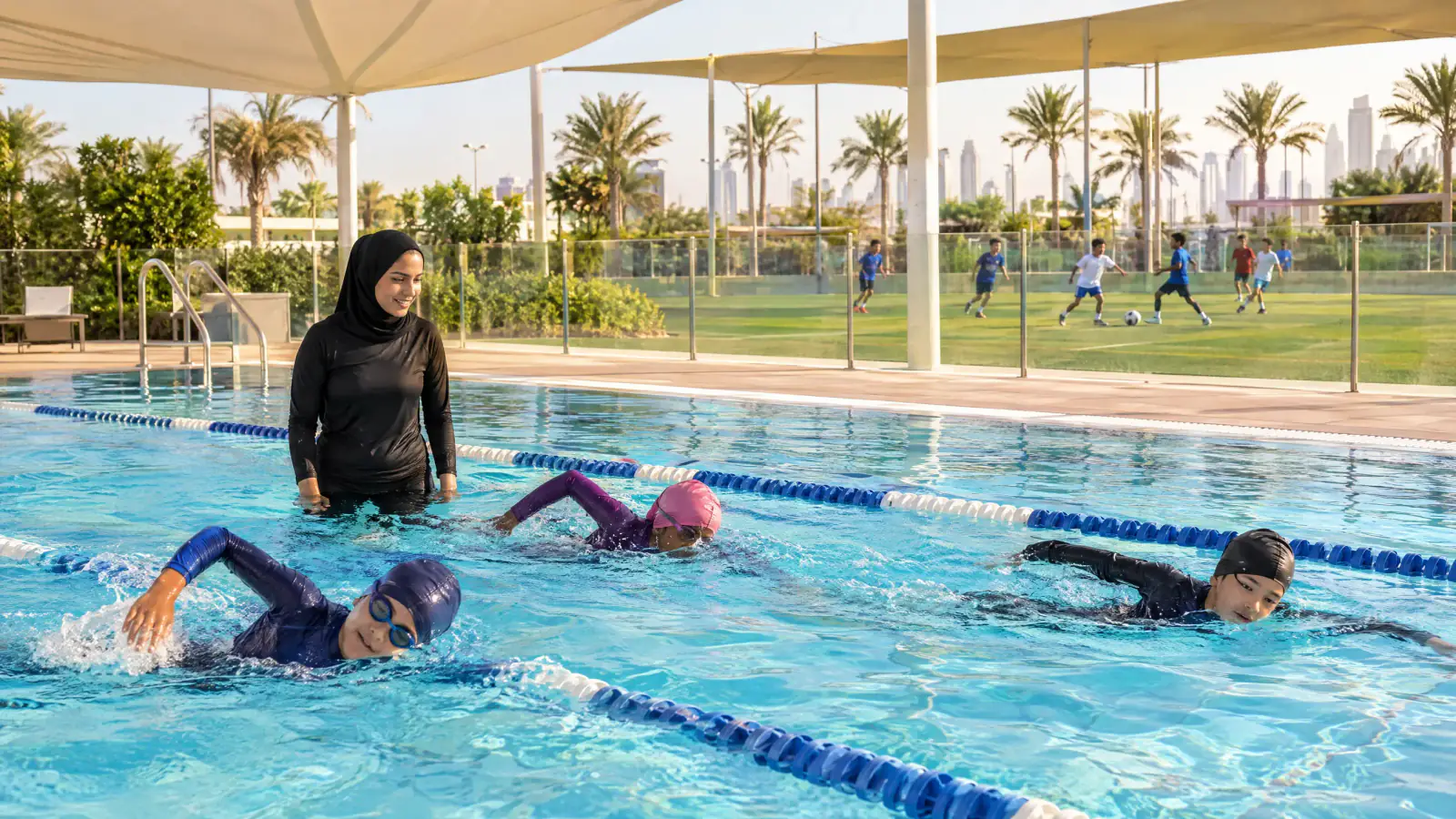
If your child is football-mad, you won't have to wait long for a Dubai academy to take them. Of the 71 football academies on Waha that publish class ages, 54 take children aged 4 or under (checked October 2026). So the real question isn't whether your child can start. It's what kind of football suits them at each age and, if they're older, whether they've left it too late.
Children's doctors are fairly clear on this, and the game itself is changing to match. Here's what they say at each stage.
Under 6: play first
The American Academy of Pediatrics (AAP) says that "Children who are younger than 6 years may not possess sufficient skills and attention span, even for simple organized sports", and that "The age of 6 years has been proposed as appropriate for most children to start organized sports because they would have achieved the skills necessary for basic participation in a variety of activities" (Logan and Cuff, AAP, 2019).

That doesn't mean waiting until 6 to kick a ball. The AAP's parenting site (HealthyChildren.org) explains why proper matches are hard for younger children: "Balance and attention span are limited, and vision and ability to track moving objects are not fully mature." For this age it advises: "Instruction should be limited, follow a show-and-tell format, and include playtime. Competition should be avoided."
So a session for 4-year-olds where every child has a ball, dribbles round cones and plays chasing games fits that advice. One built on drills, fixed positions and scored matches doesn't, however keen your child is. A kickabout in the park counts too: the AAP says children "need daily opportunity for free play". For the wider picture, see which sports suit a 5-year-old.
6 to 8: small games, lots of touches
By 6, the AAP's parenting site says, "most children have the basic motor skills for simple organized sports", and it lists soccer (football, to us) among the sports that suit 6- to 9-year-olds when they're played at a basic level. It describes what that looks like: "smaller balls, smaller fields, shorter game times and practices, fewer children playing at the same time, frequent changing of positions, and less focus on score keeping." And: "The sport should focus on learning new skills rather than winning."
English football is moving the same way. From the 2026-27 season, England Football is bringing in "A new 3v3 entry format for the youngest players in the pathway at U7s level", and each match format moves a year later, so 11-a-side starts at under-14s instead of under-13s. The aim is "giving them more time on the ball, more time on the pitch and increasing their physical activity levels" (England Football, 2025).
Dubai academies set their own formats, so treat England's plan as a benchmark. If your 7-year-old spends most of a session queueing for a drill, or waiting on a big pitch for the ball, it's worth asking why.
9 to 12: proper training, still other sports
"By ages 10 to 12 years, most children are ready for more complex sports," says the AAP's parenting site, meaning real teamwork and tactics. Even so, it says "sports at this level should focus on skill development, fun and participation, not competition", and that "Most children would rather play more on a losing team than less on a winning team."
This is also when academies start picking teams, and growth muddies things. The same page says boys who start puberty sooner "will be temporarily taller, heavier and stronger. This may give them a physical advantage, but it doesn't mean they are more talented and will continue to excel in sports." A late developer on the bench at 11 may simply be a late developer.
Keep other sports going. The AAP says "sport sampling" over childhood "promotes enjoyment while decreasing injuries, stress, and burnout", and that children who start concentrated training earlier, do fewer other activities and have less unstructured play "are more likely to drop out of sports". That matters: the AAP cites research showing that about 70% of children drop out of organised sport by age 13 (AAP, 2024). See one sport or several for the evidence, and swimming and football for one pairing that works.
Is it ever too late?
For most children, no. A 2020 review of 22 studies found that "Elite athletes often specialised between the ages of 14 and 15 compared with their non-elite or semi-elite peers who typically specialised prior to 13 years", and concluded that specialising young "is not required to achieve success at elite levels" (Kliethermes et al., 2020). All the studies looked back in time, and the authors say the research is limited.
Football has its own example. A German study compared 52 Bundesliga professionals, 18 of them senior internationals, with 50 amateur players. The national team players had played more informal football as children and more other sports as teenagers, and they specialised later (Hornig et al., 2016). It is one small study built on players' memories, so it shows a pattern rather than a recipe.
So a child who comes to football at 10 or 12, after years of other sport, hasn't missed the boat. Ask whether the academy groups children by ability as well as age, and whether they can try a session first.
Girls' football
Finding a club where girls can play takes more digging, so Waha read each football listing's website and the girls' league tables: 42 are places where girls can play, 29 with girls-only teams or sessions and 13 with mixed groups (checked 6 October 2026). The girls' football filter on the football page shows them, and each card says which kind it is.
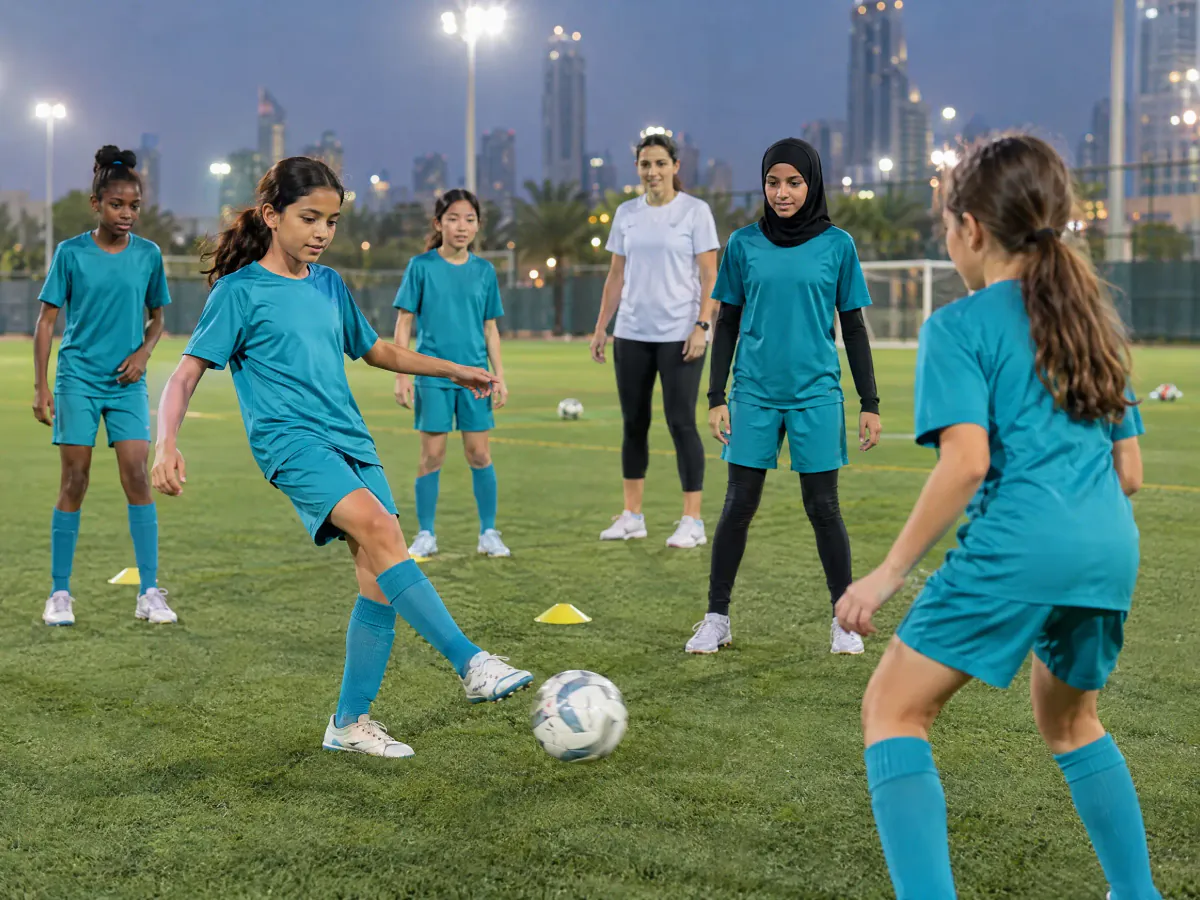
Mixed groups work well for younger girls. The AAP's parenting site says: "Prior to puberty, there are very few differences between boys and girls in endurance, strength, height or body mass, and they can compete together on an equal basis." Whether your daughter prefers a mixed group or a girls' team is her call, and it may change as she gets older.
There's a reason not to wait. The AAP's 2019 report cites a study that found girls who don't get involved in sport young (before about 8) are unlikely to start later, while boys often join in their teens. It also describes "a steep decline in physical activity" in girls from the pre-teen years through adolescence. That's one study and a broad trend, not a rule, but it's a reason to let a keen 6-year-old girl start now.
What to ask an academy
The AAP's parenting site keeps it simple: "Try to check out programs before you join them. A sign of a good program is children having fun." Beyond that, these questions are worth sending on WhatsApp before a trial:
- What does a session look like at my child's age? Under 6, look for play and a ball each; from 6 to 8, small-sided games rather than big matches.
- Which warm-up do you use? 11+ Kids is a warm-up of seven exercises (hopping, jumping, landing, strength and falling technique) that takes 15 to 20 minutes. In a FIFA-funded trial with 3,895 players in under-9 to under-13 teams, teams using it had a 48% lower injury rate than teams that warmed up as usual, and the researchers advise doing it at least once a week (Rössler et al., 2018).
- How many children per coach, and does everyone play? The AAP says fun "likely includes equal playing time, especially for younger athletes (12 years and younger)".
- How do your coaches handle mistakes? The AAP says coaches "who are more controlling and autocratic and perceived as less encouraging and supportive are more likely to cause athletes to drop out of sports".
- What do the fees cover? The AAP's list of youth sport costs runs beyond the fee: uniforms, equipment, shoes, league registration, facility fees, camps, tournaments and travel. Our guide to what kids' activities cost in Dubai shows what classes typically cost.
If your child gets pain during or after training that keeps coming back, don't train through it: see your GP or a physiotherapist.
Leagues, rankings and trying it out
Once your child wants matches, Dubai's youth leagues have tables from under-6 up. Waha's Dubai youth football rankings rank clubs' teams from recent league results, by age group, for boys and girls.
Not sure yet? A half-term camp is an easy way to try a few days of sport, and a multi-sports class or other ball sports keep variety in the week. Browse football academies in Dubai by area and age, and see how many activities is too many to keep the week manageable.